
Inside Sam Hargrave's World of Action Filmmaking

A prison riot. A car chase. A fight through the woods. A speeding train. Then, somehow, a helicopter enters the mix.
For 21 minutes in Extraction 2, the camera barely seems to blink. The sequence is the work of director Sam Hargrave, a former stunt coordinator who has built a career around bringing ambitious action scenes to the screen.
From Stunts to the Director’s Chair

Hargrave’s path to directing started long before Extraction. As he recalled on The No Film School Podcast, he studied film, practiced martial arts, and made short films in North Carolina before pursuing stunt work in Hollywood in 2005. “It was just that I was young and flexible and really wanted to be Jackie Chan, at least on the stunts side of things, so I decided to give stunts a try, and it worked out,” he recalled.
He went on to serve as Chris Evans’ stunt double for Captain America before becoming a stunt coordinator on Captain America: Civil War and taking on second-unit directing work on films including Atomic Blonde, Deadpool 2, Avengers: Infinity War, and Avengers: Endgame.

Alongside his stunt career, Hargrave continued developing his filmmaking skills through “stunt vis” and “fight vis,” in which he shot, edited, and designed previsualizations that helped stunt teams plan how action sequences would unfold on screen. He credits these opportunities with giving him much of the experience and preparation he needed for his feature directorial debut, Extraction, in 2020.

His advice to aspiring filmmakers reflects that same learn-by-doing path: “Do what it is that you have a desire to do. Don’t wait to get it done,” he said. “It’s better to do it and make mistakes than not do it and wish you had.”
A Different Point of View on Action
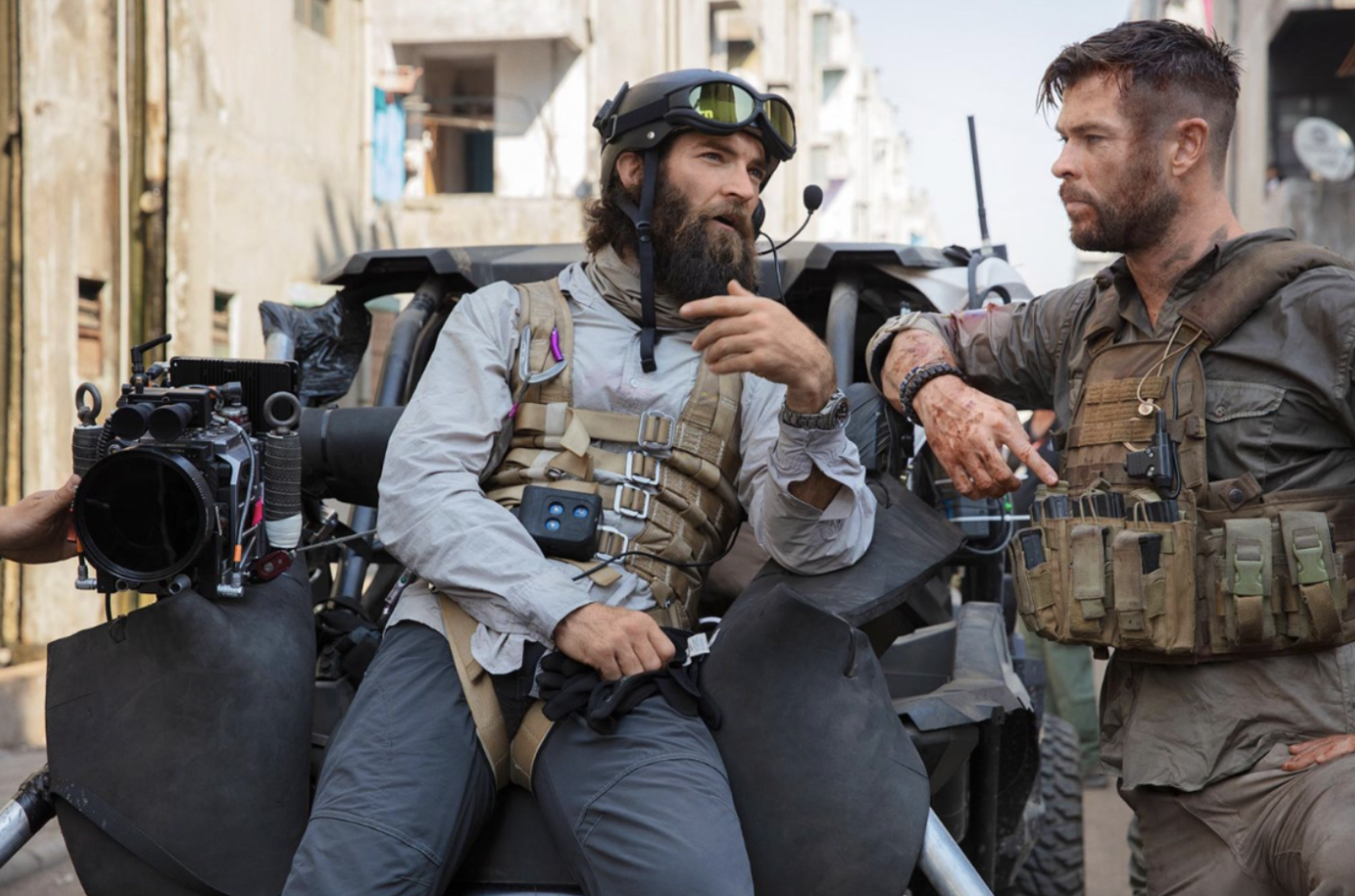
The sequence—known as a “oner”—follows Tyler Rake, played by Chris Hemsworth, through one escalating obstacle after another, all presented as if it were unfolding in a single continuous shot. Pulling it off took months of planning, weeks of rehearsals, and filming across multiple locations and days. But when everything is stitched together, the seams virtually disappear.
Speaking about how his background in stunts shapes his approach to filmmaking, Hargrave explained, “We’re filmmakers and have been for many years. It just so happens that we have a very unique point of view on action.”

For Extraction director Sam Hargrave, that point of view is ultimately about immersion. Practical stunts, hidden cuts and intricate camera choreography work together to make audiences feel less like spectators and more like participants. Speaking about Extraction 2’s 21-minute sequence, he described that goal simply: “I want to pull you in and say, ‘Hey, come along on this journey with us.’”
And perhaps nobody is better suited to bring the camera along for the ride than someone who has spent much of his career performing the stunts himself.
How Do You Top an 11-Minute Oner?
Hargrave has explained that the first Extraction featured an 11-minute-and-40-second oner packed with fights and car chases. For the sequel, Hargrave and the team pushed the concept even further.
The idea began with Joe Russo pitching a prison Extraction as a oner. After audiences responded to the technique in the first film, Hargrave says it had effectively become an Extraction “calling card.” The sequel’s script baked that ambition in, describing the sequence as “the greatest oner in cinema history.”
From there, the scale grew. Eleven minutes became 21. Fights and car chases expanded into a prison riot, a speeding train and, eventually, a helicopter.
Making 21 minutes of action feel like one continuous shot took enormous coordination. In Netflix’s behind-the-scenes breakdown of the 21-minute oner, Hargrave and Hemsworth reveal just how much work went into pulling it off.

The format also meant Hemsworth had to take on much of the action himself. In Netflix’s Making of the Oner feature, he explained, “Due to it being a oner, we couldn’t shoot it with stunt actors. We’re achieving something that no one else has done before.”
The train portion alone required three weeks of on-location rehearsals before cameras started rolling. And while the finished sequence unfolds in a matter of minutes, different pieces were actually filmed weeks—or even months—apart. That meant every detail had to pick up exactly where it left off, from Hemsworth’s hair and costume down to the placement of blood.
Hargrave wasn't directing all of this from the sidelines, either.

During the car chase, he maneuvered around the vehicle with the camera in what he called a “contortionist ballet.” At one point, he moved backward to capture Hemsworth’s close-up, then reached through the window to grab the camera with his arms crossed and keep the approaching crash in frame.
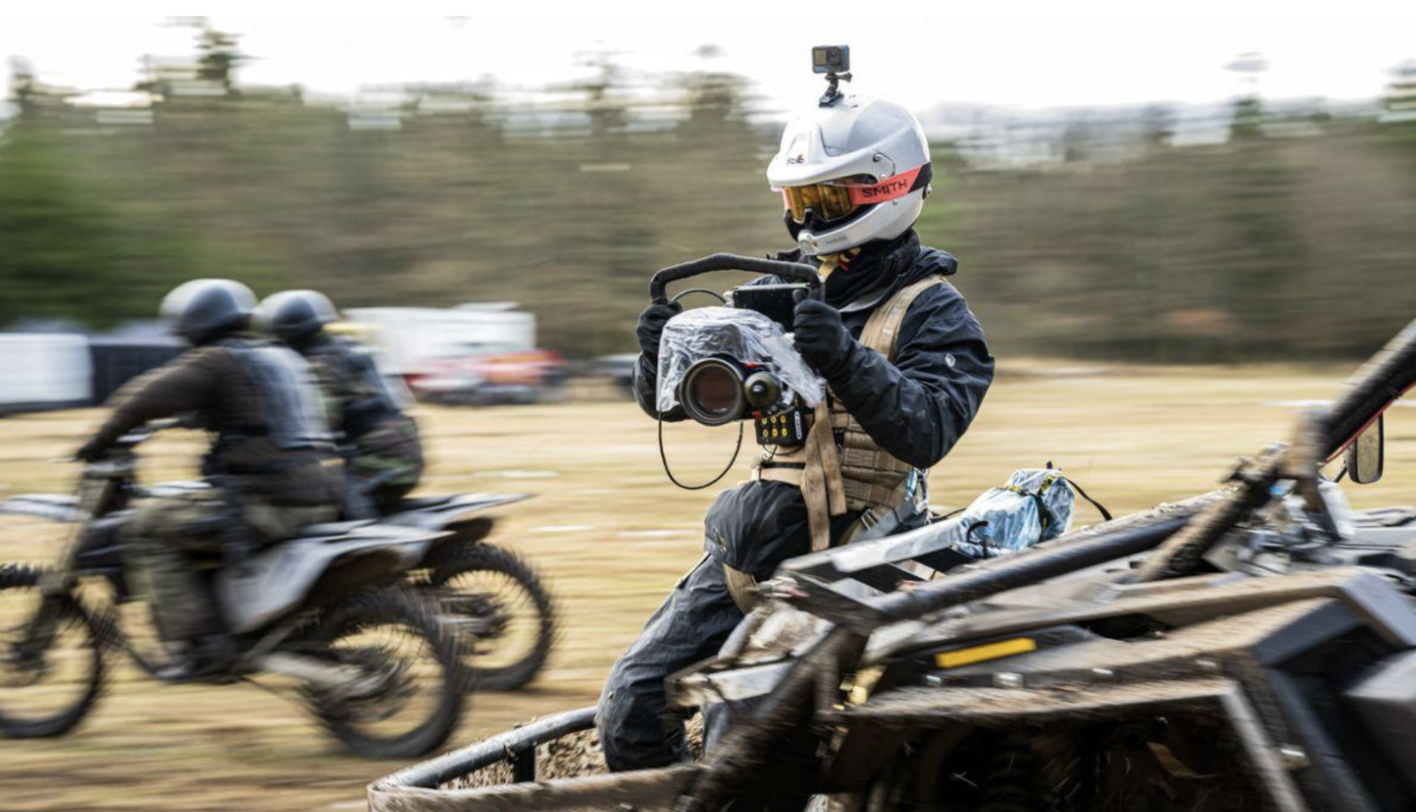

For all the planning that went into the sequence, some moments still couldn't be anticipated. When something unexpected happened, Hargrave found ways to use it. One car was supposed to hit a set of pipes and flip. Instead, the stunt triggered too early, sending the pipes scattering in a way Hargrave thought looked even better. The team worked with visual effects to reshape the shot around what had happened, and the moment made it into the final sequence.
For Hargrave, that willingness to embrace what happens on set is part of a larger commitment to practical filmmaking, so “When you can do something practically, always do it.”

The train sequence shows exactly what he means. With Hemsworth standing on top of a moving train and a real helicopter flying nearby, Hargrave was right behind him, operating the camera. He has explained that he doesn’t want to ask a performer to “go out and do the dangerous thing” while he stays somewhere comfortable. If his actors are out there, he wants to be there with them.

That approach is carrying into Hargrave’s next film, Matchbox The Movie, which premiered on Apple TV in October 2026. Inspired by Mattel’s iconic toy cars, the action-adventure stars John Cena as an undercover CIA agent whose return to his hometown pulls a group of childhood friends into an international pursuit. The film also stars Jessica Biel, Sam Richardson, Teyonah Parris, and Arturo Castro.

At San Diego Comic-Con, John Cena joked, “Sam Hargrave is the only person I’ll jump off a building for,” after a shoot that had him hanging from a helicopter and taking on stunts he admitted he was afraid to do. The experience also gave Cena a new appreciation for what drives Hargrave behind the camera. As he later told Collider, “I now know why his stuff looks the way it does, because he just refuses for it to fail.”

And Hargrave isn't finished with Tyler Rake just yet. He's returning to direct Extraction 3, with Chris Hemsworth, Idris Elba, and Golshifteh Farahani all returning. The AGBO-produced sequel began filming in Australia in July 2026, continuing Hargrave's collaboration with the Russo Brothers and Netflix. With Extraction 3 underway, Hargrave is looking to raise the bar once again. In a statement announcing the start of production, he shared, “Our goal has always been to push the boundaries of action filmmaking, and with Extraction 3, we’re taking our biggest swing yet.”
By now, that sense of proximity has become a signature of Hargrave’s filmmaking. His camera rarely observes from a distance. It runs when the characters run. It climbs into the car with them. It follows them onto the train. And when things get uncomfortable, chaotic, or dangerous, it doesn’t turn away.
It gets closer.
Want more Sam? Follow @samhargrave on Instagram.
And sign up for the 6th Annual No Sleep ‘til Film Fest for Sam himself to watch YOUR film!






Hello from the Russo Brothers!
We make content for fans, and here on AGBOVERSE we are giving you an exclusive behind the scenes look at our content. Sign up now to make sure you don’t miss a thing!


